V35 News - Page 28 of 30 - CFAO Mobility Zambia

From our Blog

Design Tips, News and Press Releases

Driving Techniques

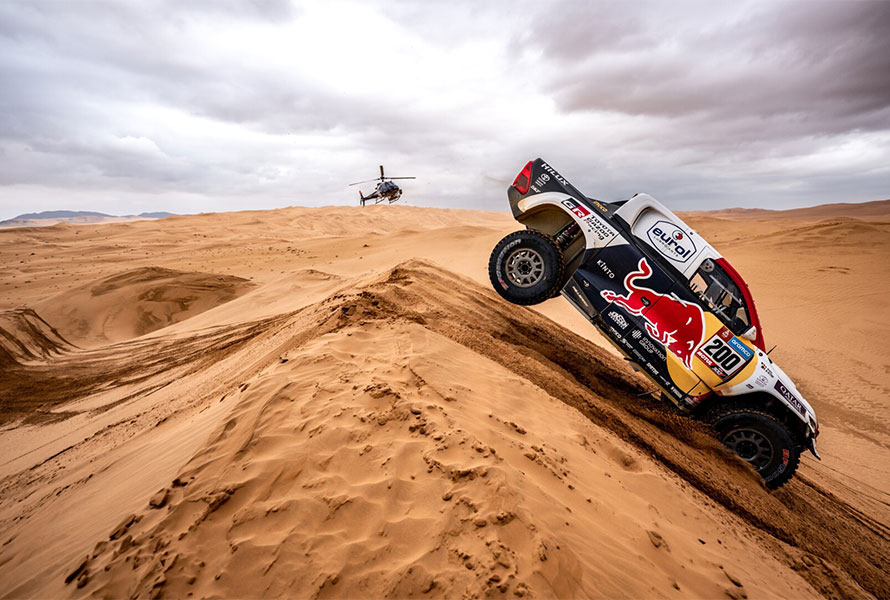
Climbing a hill

  • Approach path

If you are facing a steep or slippery hill, having an approach path to gain speed can reduce the loss of traction when driving uphill. If there is no room for an adequate approach path an alternate route can be used. An approach path however should be limited to surfaces with no potholes or other large irregularities When there is room on the surface, it is better to climb at a slow constant pace to reduce damage on the vehicle’s underbody.

  • Driving recommendations

1. Speed, distance and direction: Make an approach at an appropriate speed and from sucient distance. Climb the slope directly towards the crest.

2. Long slops: When climbing a long slope, keep a constant speed.

3. Operating the Clutch: (when the vehicle is equipped with a manual transmission): It is better to not switch gears when driving a manual transmission. However, if a gear shift is required, do it quickly and with little clutch use in order to avoid loss of momentum and traction.

4. Acceleration: When climbing a hill, use constant acceleration and ease o the pedal when reaching the crest to avoid damaging the vehicle underbody. If the tires loose traction due to an excessively slippery surface, slowly reduce the amount of acceleration to return traction to the wheels.

  • Recovery

If you completely loose forward momentum and begin to slip before reaching the top, use the engine and transmission to brake (only for manual transmission vehicles) to recover. Keep the vehicle pointed towards the upper portion of the hill and use your rear view mirrors to guide you along your descent. It is best to avoid braking in order to avoid wheel lockup. However, brake softly to keep the vehicle under control* when your vehicle has an automatic transmission since the engine will not be able to assist in slowing you down.

Driving down a Hill

  • Driving Tips

1. Gear selection and braking: Choose a low gear (or reduction gear in an automatic transmission) to take advantage of the engine’s braking capacity, reducing the use of the conventional brakes. When driving down a steep slope, it’s advisable to choose “L4” or “LL” to obtain maximum engine braking capacity. Depending on the vehicle’s transmission (automatic or manual) and the driving conditions, you may have to use the brake pedal.

2. Maintaining course: Drive down a hill perpendicular to the base. If tires loose traction, accelerating softly may return traction and steering control.

3. Long slopes: Vehicles tend to increase speed when going downhill continuously.

4. Clutch operation: When driving downhill, do not apply the clutch since this will eliminate the engine brake, causing a loss of traction and acceleration. This is one of the most dangerous things to do when driving downhill.

Holes or wading areas

  • Driving Tips

1. Approach angle and path: Approach crevasses and holes (ditches) at an angle which allows for maximum control. Direct approaches may result in impacting the front bumper or the skid plate against the edge of the hole. By approaching at an angle, the space to maneuver is increased. Approaching at an angle also makes the tires overcome the obstacle one by one, reducing stress on the chassis. It is important at this time for at least three of the four wheels to maintain traction. Make sure to use the vehicle in 4WD mode at all times with the center differential lock applied (if applicable) to drive in these conditions.

Warning: If you are approaching at an incorrect angle, both wheels may enter the ditch at the same time, which can cause you to become stuck. Drive with caution.

Approach the ditch at an angle and allow for the tires to enter one by one:

2. Driving speed and acceleration: Slowly let the tires enter the gap one at a time. Then, accelerate gently until the tire begins to exit the ditch and decelerate immediately after the tires pass the obstacle. Repeat this process with each of the four tires. On slippery surfaces, increase or decrease speed as deemed necessary.

3. Reduce depth or inclination: When the depth or the angle of an obstacle is too great, adjustments can be made by placing a rock or another object where the tire makes impact.
Have the tire make contact with the “wall” of the gap/ditch and then accelerate softly to make the tire overcome the “wall”. Decelerate immediately after the tire overcomes the “wall”.

Inclines

  • Driving Tips

1. Approach angle: Dierent procedures must be made depending on the circumstances. Regardless of the procedure chosen, make sure the driver’s side is facing the ascending incline (looking up towards the summit). This gives the driver a greater sense of security.

2. Driving speed and acceleration: Constant acceleration and driving speed is always best.

Mud

  • Driving Tips

1. Path: Drive only on shallow mud (the depth of the mud should never be above the lower portion of the center differential). Keep the wheels on the most solid terrain possible.

2. Gear selection: Choose a lower gear which you are able to control on muddy surface. If the vehicle is equipped with locking differentials, make sure they are locked.

3. Clutch operation: Maintain speed in such a way that you do not loose traction and not required to shift gears. Shifting may result in sudden deceleration and make the vehicle become stuck.

4. Steering operation: Turning the steering wheel on muddy terrain may increase the surface resistance. Try to keep the steering as straight as possible.

5. Adjusting tire pressure: On muddy surfaces, the mud may become stuck on the gaps between the tire tread (contact patch), reducing traction which make the vehicle easily become stuck. To avoid this from happening, reduce tire pressure to 1.2 kg/cm to 1.5 kg/cm (17 to 21 psi). This results in an increase in traction. If the mud is too wet, increasing tire pressure may result in an increase in traction, which will result in less mud getting stuck on the tires.

On muddy terrain, consider the use of tire chains.

Rivers

  • Driving Tips

1. Approach angle and path: Choose a path going downstream. Driving against the ow of water may make the vehicle become stuck. Also avoid water depth greater than the center of the wheels. In places where a river is owing slowly, you should be especially careful of mud and sand accumulations on the river bed. Water is usually deeper than it looks, which is why you should add between 20 to 30 cms to the appeared depth from the surface.

2. Gear selection and speed: L4 (part time) or LL (full time) is a good gear selection and constant acceleration will avoid water from entering the engine and exhaust. If water enters the air intake or electrical system this will cause water hammering/broken connecting rods* or a short circuit.

3. Steering operation: The ground beneath the water may not be visible due to mud or reection on the surface. These situations may cause the vehicle to become stuck in a gap on the river oor. To avoid accidents in these situations, your thumbs should never be on the inside portion of the steering wheel.

4. Choose where you will exit: Where you exit the river should be a solid surface will a small incline. Many vehicles become stuck when exiting a river.

Water hammering / broken connecting rods: if the amount of water which enters an engine’s combustion chamber exceeds its capacity, the appropriate engine combustion stops. This may cause the connecting rod to bend or break, as well as possibly damaging the piston.

Sand

  • Driving Tips

1. Traction and tire pressure: On sandy terrain the surface is usually soft with a high degree of resistance, similar to muddy terrain. This is why gaining traction on sand is dicult. To avoid becoming stuck, reduce your tire pressure. However, reducing pressure excessively may cause the tires to separate from the wheels, which will bring a whole new series of problems.

2. Gear selection: Considering the lack of traction, “L4” (LL) is a good choice. If your vehicle come equipped with locking differentials, use them.

3. Steering and clutch operation: Do not turn suddenly. Operating the clutch may cause the vehicle to become stuck. Therefore, use a gear which can take you the entire way without having to change it. If you must switch gears, do so quickly so as to not lose wheel torque. Automatic transmissions are recommended over a manual, since they don’t require clutch operation.

4. Stopping the vehicle: Applying the brakes will sink the vehicle into the sand. Therefore, let the vehicle roll to a stop, or better yet, stop the vehicle on a solid surface which will make starting o on a hill possible.

Rocky Surfaces

  • Driving Tips

1. Gear selection and speed: L4 (LL) is the appropriate transfer lever position for driving over steep rocky terrain. Drive at a moderate speed, since driving at higher speeds may shoot rocks from the ground to the undercarriage of the vehicle, which may result in vehicle damage. Also, the impact of driving over a ditch or hole may damage the tires, wheels and/or suspension.

2. Trail: For your safety, it is recommended you have a passenger in the front seat assisting the driver. Observe sharp rocks which may damage the wheel or puncture a tire. When driving over rocks, make sure these will not move out of place. If a rock moves from the tire to below the vehicle when driven under, it may lodge under the chassis or may cause a rollover.

3. Tire pressure: Lowering tire pressure is an option when more traction is required. However, higher tire pressure will be needed more often to minimize damages from the rocks to the tires and wheels.

4. Steering operation: When preparing for the possible steering kickback caused by rocky terrain, place your thumbs over the steering wheel. You must keep a firm grip at all times to avoid moving o-course from the originally selected path.

Snow

  • Driving Tips

Inspecting the terrain

1. Since dangerous objects may be below the visible slow, walk over the surface to test it before driving.
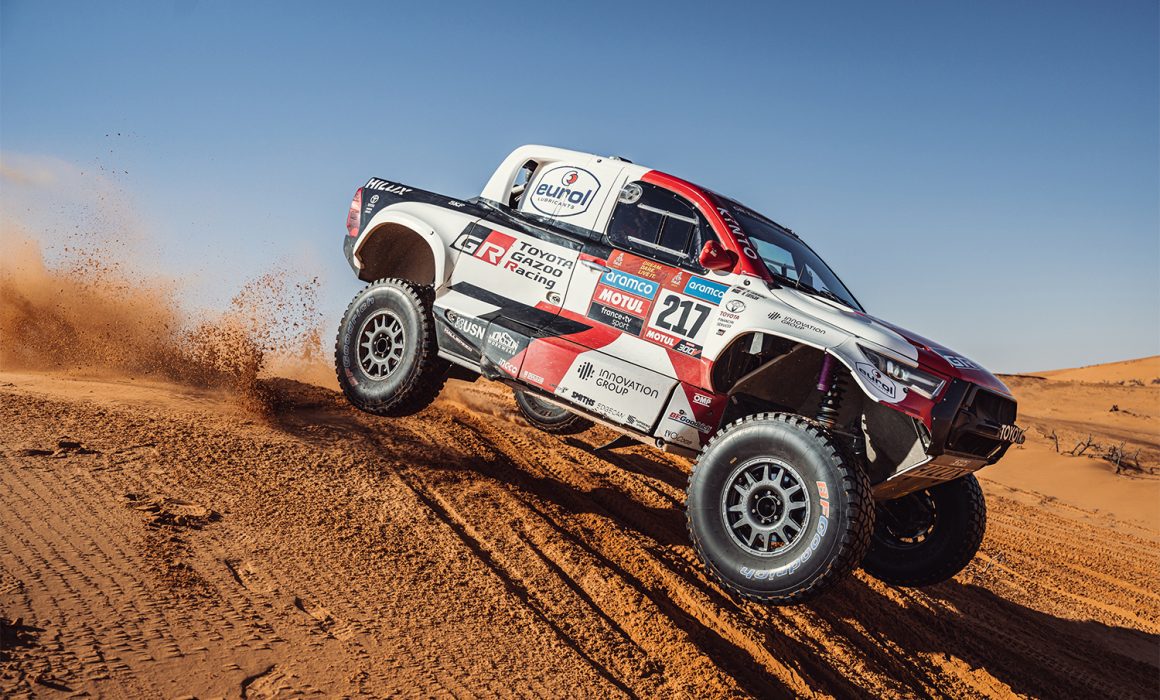
2. The maximum amount of slow you should drive over should just reach the lower portion of the differential. If the surface consists mainly of fresh, unpacked snow, the maximum height may reach the lower portion of the bumper. Anything deeper will require you to remove part of the snow from the path and then continue.

3. The quality of the snow will change it’s reaction to a vehicle. Vehicles may become more easily stuck in wet, icy snow patches.

4. Some vehicles will be more stable when driving in trails left by other vehicles.

Starting the vehicle

Releasing the clutch pedal quickly will result in a loss of traction. To start the vehicle, release the clutch slowly and gently. Also, select a higher gear. For automatic transmissions, simply release the brake pedal to set the vehicle in motion.

Driving speed

On a snowy or icy surface, drive at no more than half the recommended speed limit.

Steering operation

1. Use specially designed tires for driving on snow*. Having excesscondence when driving a 4×4 over snow may result in the vehicle getting stuck or having an accident. Once the vehicle loses traction there is no dierence between a 4×4 and a 4×2 vehicle.

*Snow tires: These are tires specically designed for driving in snowy or icy conditions. The main benet of this tire is the ability for it to remain elastic under cold conditions, which improves its traction. The tire’s tread is specically designed for smooth, comfortable driving over snowy and/or icy roads.

2. Making tight turns is dangerous. If the vehicle begins to skid, the vehicle will travel to either the lowest portion of the road or towards the tire which began slipping. Slowly press the accelerator (do not release it) and steer in the opposite direction to regain control.

3. When the vehicle begins to loose control while turning, drivers tend to over-compensate. Drivers must be aware of this trend, since the vehicle may suddenly regain traction and then begin to severely skid out of control.

Brake

1. Test the brakes to see if a wheel lockup is possible, but in a secure, open area. Knowing this limit allows the driver to make delicate maneuvers under high-pressure situations.

2. Vehicles equipped with snow tires or chains have less horizontal grip than conventional tires. Therefore, driving speed must be reduced before making a turn.

3. The roads immediately before an intersection or corner tend to be slippier than normal, since many vehicles have previously applied the brakes in these places before.

Uphill climbing

Begin your ascent observing the vehicles in front of you and try to not stop when climbing. If you are forced to stop and cannot restart, return to the base of the hill and start your climb from the beginning.
Downhill driving

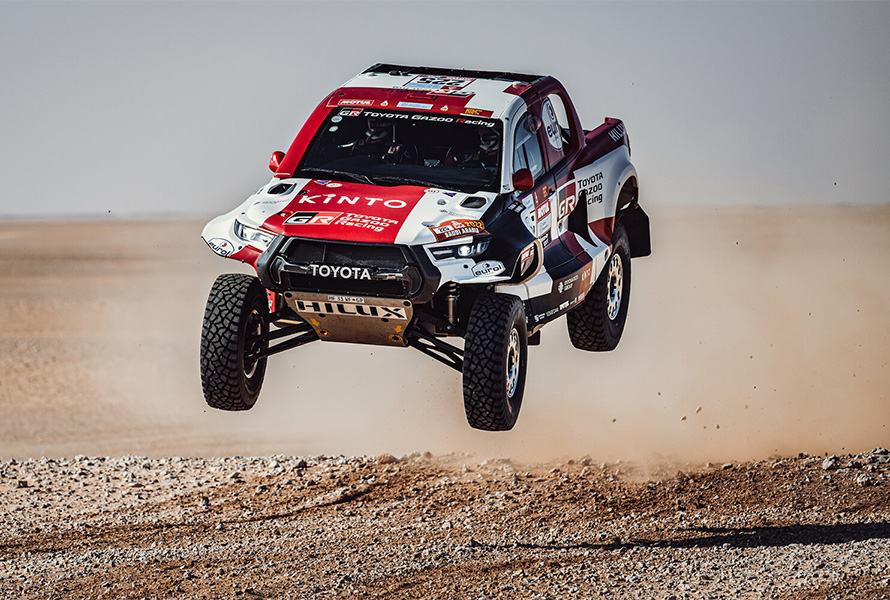
Switching gears or a sudden deceleration when driving downhill should be avoided, otherwise the vehicle may lose traction. Select a low transmission gear and allow the engine to do the braking for you.

  • Tire Chains

1. There are metallic snow chains and non-metallic snow cables. Snow cables are lighter, and are easier to install and transport. On the other hand, metal snow chains are heavier and are more dicult to install, although they are more economical and are easier to repair should they become damaged.

2. Snow chains or cables should be installed as soon as snow begins to fall continuously. If other vehicles are driving with them, that is a good sign to install them. In the case of a 4×4, install the snow chains on the tires which are supporting the greatest amount of weight. For driving over deep snow or driving downhill, install the chains on the front tires. When driving uphill or over more compact snow, install them on the rear. If chains are installed on the front tires they may cause damage to the inner portion of the wheel, the axle or the brake lines. When installing chains on the rear tires, they may a ect steering performance, but allow for easier correction. If the vehicle becomes stuck, the chains may be removed and placed on the front tires to obtain more traction. Placing the chains on the front or rear wheels is a decision which should be made depending on the situation, but the rear tires are generally the norm.

  • Additional advice for cold weather driving

Snow accumulation on the vehicle

When driving, snow attached to the fenders may a ect steering, and visibility may be reduced by snow on the head lamps. Correct these possible issues by occasionally checking the vehicle.

Try to not bring snow into the vehicle

Be careful not to bring snow into the vehicle’s interior through your shoes and clothing, since it may make the pedals slippery or icy and may even freeze the pedals when the vehicle is parked.

Parking

1. Avoid parking in areas with strong winds snow, or where a large snowfall may occur if possible.

2. When parking for extended periods of time, take the time to clean all the snow o of the vehicle before driving again.

3. A way to assure the vehicle’s battery is maintained is by disconnecting it from the vehicle. When in extremely cold conditions, removing the battery altogether and storing it in a warmer location is also an eective measure. Changing the vehicle’s orientation when parked or putting cardboard or towels over the vehicle’s hood are not eective measures.

4. To avoid the vehicle’s brake pedal from freezing, park the vehicle without using the parking brake. Leave the vehicle in gear, either in rst gear or in reverse.

5. To avoid the windshield wipers from freezing to the glass, raise the wiper arms, avoiding the blades from touching the windshield.

6. To avoid the door locks from freezing, lubricate the lock with a non-corrosive grease or oil where you insert the key.

Door freezing

If you attempt to force the door open after it has frozen, you may damage the door and/or frame’s rubber seal. Apply heat with moderately warm water and wait for the door to unfreeze.

Fuel selection

Fuel will freeze below 10° Fahrenheit (-12° Celsius), blocking the fuel line. Leave some space in your fuel tank before arriving at your destination, which will allow you to rell the tank with anti/freezing fuel if it is available.

Battery fluid

When the battery does not have sucient uid, stored electricity will drain more rapidly and starting in cold weather becomes more dicult.

Amount of radiator fluid and antifreeze

Avoid freezing of the cooling system by using LLC Antifreeze liquid.

Windshield washer fluid

Driving in snowy conditions uses more windshield washing uid than usual. Make sure the reservoir is full.

Starting the vehicle

When a vehicle has been parked for an extended period of time, the radiator uid may freeze slightly, even when antifreeze is used. If the vehicle is started before the frozen liquid thaws, the little liquid remaining in the radiator may boil and rupture a hose. Allow the engine to heat up before moving the vehicle. Wait until warm air comes out of the air conditioning system or the temperature gauge begins to move.


Tips on How to Drive Over Difficult Terrain

Appropriate Seating Position

Make sure you are in a proper seating position, which is required for your driving safety, as well as allowing you to respond rapidly and correctly to any change in driving conditions. Make sure the vehicle is as stable as possible is one of the most important things to look for when driving over dicult terrain. As useful tip is to slide the seat forward and place the seat back in a more upright position than normally used once you enter a dicult terrain. This driving position will not only give you improved driving visibility, but also assure a three-point seating position with the left foot, knee and right hip, which allows you to maneuver the vehicle quickly and precisely.

Mirrors are your second set of eyes. Tips for proper adjustment

When additional attention is required on a path when driving over dicult terrain, the left and right side mirrors should be adjusted slightly downward in order to allow you to see the rear wheels and the drive line.

Close all windows

If the situation allows, all windows should be completely closed to avoid the entry of foreign objects and to serve as a precaution in the event of a rollover. It is extremely dangerous to take your head out of the window when driving in reverse. However, a small opening of two to three centimeters can be useful in allowing the driver to hear changes in engine conditions as well as slipping tires due to a loss of traction.

Correctly Handling the Steering Wheel

When driving o-road the use of the steering wheel is basically the same as when driving over paved roads. A lot of attention should be paid when driving over bumpy roads since potholes and bumps can make the vehicle tilt and/or kickback from the steering wheel. If the steering wheel is not held properly, the driver can suer broken fingers or sprained wrists.

Soft and precise braking control

Roughly operating the brake pedal can lead to steering lock and sliding of the vehicle when driving over wet, frozen surfaces, as well as sand and gravel, thanks to driving over low friction surfaces with a heavy vehicle. Special care should be taken when driving down steep slopes which are actually more slippery than expected. In this case, the pedal should be pressed softly. In principle, you should do most of your braking with engine compression and use the conventional foot brake as a secondary measure.

Always drive carefully!

In general terms, a 4WD vehicle is heavier than its 4×2 counterpart, due to additional drivetrain components. If you attempt to drive a 4×4 vehicle in the same way you would a 4×2 vehicle, you could end up with a longer braking distance or less responsive acceleration when starting o or overtaking another vehicle. In addition, the vehicle’s center of gravity is placed higher due to the additional necessary road clearance which is necessary for driving over dicult terrain. High G-Forces can aect the vehicle’s stability when turning
due to a larger side imprint. In order to properly maneuver with the unique 4×4 features mentioned above, you must always drive with caution and not be overly aggressive. Avoid any sudden operation such as quickly accelerating, sharp turns, stopping or shifting gears suddenly, since you may cause an accident or become stuck.


Basic information regarding a 4×4

How does a 4×4 work?

Different mechanisms and features of Four-Wheel Drive (4WD) systems

Most vehicles today are two-wheel drive vehicles, with traction either at the front (FWD) or at the rear (RWD). 4WD vehicles however have the ability to have traction on all four wheels, which allows for the vehicle to move even if one wheel has no grip. A vehicle with these features generally has more traction than a FWD or a RWD vehicle and provides greater stability in dicult terrain (such as in sand, mud or other slippery surfaces).

The use of 4WD vehicles


4WD Modes

In this guide, we’ll focus on the two most common Four Wheel Drive systems: Part-Time 4×4 and Full-Time 4×4.

Part-Time 4×4

In a Part-Time 4×4, a vehicle is generally moved through traction received at the rear axle (RWD) until the driver engages the Four Wheel Drive transfer (o -road gearbox). There are two types of transfer controls for a Part-Time 4×4.

1. Lever Type transfer : Move the transfer lever from “H4” to “L4”.

2. Electronic Switch Type transfer: By pressing a button or moving a switch.

Shifting into 4WD in older vehicles generally requires the vehicle to be at a complete standstill. However, most modern 4×4 vehicles allow you to engage 4×4 mode without having to stop the vehicle. This is known as shift on the fly. Because of this, confirm the appropriate procedure for your vehicle by reviewing the owner’s manual in order to avoid damaging the transfer case and a potential accident. When the vehicle shifts into Four Wheel Drive, an indicator light will usually light up on the instrument panel, which conrms that 4×4 mode is engaged. However this light burn out over time, which is why the best way to know if the vehicle has traction on all four wheels is by actually driving it.

Full-Time or Permanent 4×4

In a Full-Time 4×4, all four of the vehicle’s wheels are permanently connected to the engine. Here, the use of the transfer lever is not to engage or disengage the 4WD, but rather optimize the 4×4 system according to each drive surface.

Driving Fundamentals for Difficult Terrain

LSD & Center Locking Dierential

Some vehicles come equipped with an LSD or Limited Slip Dierential. In the case of a rear-wheel drive vehicle, if the rear wheel begins to spin due to loss of grip, the limited slip dierential automatically transfers a small amount of engine torque to the opposite wheel, thus avoiding getting stuck thanks to the single wheel with no grip. Some vehicles come equipped with front or rear Limited Slip Dierentials, depending on the type of traction available on the vehicle.

1. This type of dierential lock us useful when one or both wheels on the same side of the vehicle (left or right) are spinning due to lack of surface grip. Before using a diferential lock, the driver should first engage traction to both axles (H4 or L4 in Part Time vehicles, HL in Full-Time vehicles).

2. Front and rear differential locks should never be used in conditions others than those described previously, since this could make driving, and especially turning, very dicult. This is especially true if a center differential is locked and not only the rear, which will cause the vehicle to spin suddenly during acceleration or braking.

  • Engine braking: by removing your foot off of the accelerator, the engine canmaid in braking the vehicle. The resistance caused by the transfer case and transmission slows the engine speed, reduces the vehicle’s speed and effectively slows the vehicle. This is also known as “braking through engine compression”.

Braking when turning with a 4×4

When driving in 4WD mode, turning sharply will give the driver the impression that the vehicle’s differentials are locked. This is known as the tight turning phenomenon and is caused by the difference in speed between the front and rear axles. Although this doesn’t mean the vehicle is malfunctioning, if this is done on a road with good traction, it can cause premature tire wear and damage the drivetrain. This can be avoided by simply driving without the center differential locked (HL or LL).


Know Our Effective Approach – The Toyota Way

The Toyota Way is a set of principles and behaviors that inspire the Toyota Motor Corporation’s managerial approach and production system. Toyota first summed up its philosophy, values and manufacturing ideals in 2001, calling it “The Toyota Way 2001”.

Heritages of the Toyota Production System

The ‘Toyota Way’, was established from The Toyota Production System (TPS), which is based on the philosophy of complete elimination of all waste in pursuit of the most efficient methods, which has roots tracing back to Sakichi Toyoda’s automatic loom. TPS has evolved through many years of trial and error to improve efficiency based on the ‘Just-in-Time’ concept developed by Kiichiro Toyoda, the founder (and second president) of Toyota Motor Corporation. Waste can manifest as excess inventory, unnecessary processing steps, and defective products, among other instances. All these “waste” elements intertwine with each other to create more waste, eventually impacting the management of the corporation itself.

Kiichiro Toyoda, who inherited this philosophy, set out to realize his belief that, “the ideal conditions for making things are created when machines, facilities, and people work together to add value without generating any waste.” He conceived methodologies and techniques for eliminating waste between operations, both lines and processes. The result was the Just-in-Time method. This concept provides a vision of flowing value directly to the customer without interruption. Increasingly, customers want customized products and services on demand. Furthermore, ‘Built-in-Quality’ concept follows the principle of doing it right the first time to avoid downstream modifications.

The foundation of the TPS house clearly suggests it is not possible to flow value smoothly and perform each step correctly, when there is disorder and instability. Hence the need to level the flow of work to make it steady and consistent.  Many manufacturing and service organizations that have followed these principles have had dramatic success in eliminating waste, streamlining processes, saving money and better serving customers. As seen in the image below, the goal on the roof of the TPS house suggests that doing these things will improve quality, cost, delivery, safety and morale. It is shown as a system in which all the parts are interconnected, as in a structure—like a house.

Nevertheless, the people aspect who are supposed to be building and rebuilding the TPS house (applying the concepts) to familiarize to a dynamic environment are missing in the image, which brings us to the invention of the “Toyota Way”.

In 2001, Toyota created the “Toyota Way “house as an improved version house from the TPS house, which consists of principles in two key areas: continuous improvement, and respect for people. The ‘Toyota Way’, was defined in a simpler framework for applying Toyota’s Guiding Principles and building the kind of company that people should apply in every aspect of their day-to-day work livelihood, globally. It is the foundation of Toyota corporate culture. The new renovated ‘Toyota Way’ House  is built on two pillars: Continuous Improvement, which takes in the concepts of Challenge, Kaizen and Genchi Genbutsu, and Respect for People, which embraces Respect and Teamwork,  and gives a clear corporate direction as shown below:

1. Continuous improvement

Challenge

When we embrace a challenge we also commit oneself to challenging what we know and do to complete it. This means we have to approach each challenge, not only with creativity, but also with passion and courage.

Kaizen

Kaizen is the essence of continuous improvement. It is a way of thinking which encourages and empowers everyone to identify where and how even small changes can be made to benefit the business, the team or an individual performance.                                 

Genchi Genbutsu (現地現物)

Genchi Genbutsu literally translates “real location, real thing” and it is a key principle of the Toyota Production System. The principle is sometimes referred to as “go and see”. It suggests that in order to truly understand a situation one needs to observe what is happening at the site where work actually takes place, the genba (現場). One definition is that it is “collecting facts and data at the actual site of the work or problem. To achieve this one has to go to the source. “Going to the source” – is about checking the facts oneself, so that one can be sure to have the right information needed to make a good decision.

2. Respect for all at the heart of our business

Respect for people

This focuses on the relationships among colleagues, it is important that everyone is respected both for what they contribute and who they are. That includes an employees’ ideas, cultural and personal beliefs. Through Respect everyone in a corporation will have a personal responsibility for what they do and build mutual trust and understanding, which will aid build a diverse and sustainable workforce that reflects society around us and our changing customer base.

Teamwork

Successful teamwork is about everyone understanding corporate goals and working together to achieve them. Every member of a team is given the opportunity to do their best and is accountable to achieve results, Just-in-Time. Notably, throughout our business, from the board room to the production line, we recognize that people are our greatest asset. We strive to give human resource stable employment in line with the ‘Toyota Way’ with opportunities to develop their skills, responsibilities and commitment as individuals and committed team members.

The “Toyota Way” has been adopted not only by companies in Japan, Toyota companies worldwide, within the automotive industry, but also in production activities and continues to evolve globally.


The Success Story of Akio Toyoda, Past President of Toyota Motor Corporation (TMC), in Summary – Chapter 5

Akio Toyoda is a Japanese business executive who currently serves as the chairman of Toyota Motor Corporation. He was previously the company’s president and chief executive officer (CEO). As the grandson of the great Kiichiro Toyoda, the founder of Toyota Motor Corporation, Akio has demonstrated his exceptional leadership by guiding the brand to its peak, despite challenges such as the international recession, global vehicle recalls, and the devastating 2011 tsunami that severely impacted the automotive industry.

A brief background to this outstanding man: Mr. Akio Toyoda was born on May 3, 1956, in Nagoya, Japan, to Shoichiro Toyoda, a former chairman of Toyota Motor Corporation. His parents chose the name Akio, which means Bright, Clear, Husband, and Man—befitting his Japanese heritage. He earned a Bachelor’s degree from Keio University and later pursued a Master’s in Business Administration (MBA) from Babson College in Massachusetts. Upon his return to Japan in 1982, Mr. Akio joined Toyota Motor Corporation.

As a dedicated TMC employee, Toyoda gained experience in all key areas of the company’s operations, including marketing, production, and product development, both in Japan and internationally. In 1998, he became a board member and vice president at the company’s joint venture with General Motors (GM) in California.

In 2000, he returned to Japan and was appointed to the TMC Directorial Board. He played a key role in launching and supervising Gazoo.com, an online shopping guide designed to provide information on new and used vehicles. He also oversaw domestic marketing campaigns, Toyota’s operations in the U.S., and production management. In 2001, he was appointed Chief Executive Officer of Toyota’s Asia operations, and the following year, he took charge of the Sino Operations Center (SOC).

After serving two years as Senior Managing Director, Akio was promoted to Chief Officer for China Operations, Asia, Oceania, and the Middle East. Later, he took on the role of Executive Vice President and Representative Director, overseeing key areas such as Information Technology, Product Management, Quality, Purchasing, Domestic and Overseas Sales, and Foreign Operations.

In 2009, Akio was appointed President of Toyota Motor Corporation, propelling the company to its status as the world’s largest automobile manufacturer. His leadership played a crucial role in strengthening Toyota’s global presence, maintaining quality standards, and driving innovation.

Beyond his corporate responsibilities, Akio Toyoda is a passionate car enthusiast. He is married and has two children—a son and a daughter. His love for motorsports is evident in his participation in professional racing events under the pseudonym “Morizo.” He has competed in the ADAC 24 Hours race three times. The ADAC GT Masters, a grand tourer-based auto racing series organized by the Stéphane Ratel Organization (SRO) and supported by the German ADAC automotive club, has been one of the racing platforms he has participated in. Although primarily based in Germany, select ADAC GT Masters events take place worldwide.

Akio Toyoda has been an embodiment of passion and dedication within Toyota Motor Corporation. Thanks to his leadership, Toyota once again regained its position as the top automaker in the world in 2012 and has continued to maintain its status as a global industry leader.

For his significant contributions, Mr. Akio Toyoda was honored as “Autocar’s Man of the Year” in 2012. His legacy continues to inspire the automotive industry, and his influence remains strong in Toyota’s journey toward innovation and excellence.


Tatsuro Toyoda, Leader of Toyota’s Global Expansion-The Story of Toyota, Chapter 4

Tatsuro Toyoda was born on the 1st of June 1929, in Nagoya Japan. He was the grandson of Sakichi Toyoda, who started Toyoda Automatic Loom Works in 1926. His father, Kiichiro Toyoda, founded the Toyota Motor Company in 1937.

Tatsuro, son of Kiichiro Toyoda and uncle of current President Akio Toyoda, took the wheel of the family’s namesake automaker in mid-1992 from elder brother Shoichiro, who piloted Toyota’s widespread global expansion. During his tenure as president, Tatsuro struggled with an economic downturn in Japan and an earnings slump that were undercut by falling sales and shrinking share in the home market. It is well known that before becoming head of the parent company, Tatsuro served as the first president of Toyota’s pioneering joint-venture assembly plant with General Motors, the New United Motor Manufacturing facility in Fremont, California which began production in 1984.

The plant was Toyota’s first experiment with manufacturing in the United States Of America (U.S.A), and gave it confidence for going solo on such ventures as its extension from the Georgetown assembly plant in Kentucky.

Toyoda’s task was the difficult one of introducing Japanese manufacturing techniques while maintaining the trust and morale of New United Motor Manufacturing, Inc. (NUMMI)’s unionized American workforce. His success in getting the venture off the ground opened the door for Toyota’s journey into U.S.A production.

Toyota announced in 2009 it would close NUMMI after cash-strapped GM withdrew from the joint venture in the wake of the global financial crisis. The plant was later sold to Tesla incorporated company.

Tatsuro Toyoda earned a degree in mechanical engineering from Japan’s prestigious University of Tokyo and later received an MBA from New York University, where he studied under the famed quality-control guru W. Edwards Deming. Most of his career was focused on International Marketing.

Frustrated by the slow pace of negotiations, Toyota’s senior management decided to outwit Japan’s Ministry of International Trade and Industry to head off the proposed 100 percent tariff on Japanese luxury cars. Behind the decision were, from left: Honorary Chairman Eiji Toyoda, Chairman Shoichiro Toyoda, Vice Chairman Masami Iwasaki and President Tatsuro Toyoda. His frustration led him to step down as president, after serving as vice chairman for several years.

Today, the Japanese automaker operates in more than 10 manufacturing facilities in the U.S. arguably, it’s Tatsuro’s role that cemented Toyoda’s legacy. His departure in 1995 paved way for Hiroshi Okuda to take control of the automaker. Okuda was the first president outside of the Toyoda family since 1967.

In 2009, Akio Toyoda, Tatsuro’s nephew, became president, which brought the family back in control of the automaker. Undeniably, Toyoda held various positions after his tenure as president, including an advisory role and vice chairman. Indeed, he championed the brand on a global platform.

He battled with pnuemonia and shortly passed away on December 30, 2017. A private funeral was held for family. To date, Mr. Tatsuro is known for his vigilant in spear heading the recogntion of Toyota Brand on a global platform.


Shoichiro Toyoda Champions Total Quality Control – The Story of Toyota, Chapter 3

After the death of Kiichiro Toyoda, his son Shoichiro Toyoda was named the Successor-Toyota Crown Prince.

Shoichiro Toyoda Champions Total Quality Control – The Story of Toyota, Chapter 3

Shoichiro Toyoda was born in Nagoya on 17th February 1925, to Kiichiro and Hatako Toyoda. Being the eldest son in a traditional Japanese family firm, Shoichiro seemed destined to run the company from the time of his birth.

Growing up under the instruction of his mother, Shoichiro learned all that was going on in his father’s car and truck company, and he absorbed the lessons.

Shoichiro graduated from high school in 1945. He wanted to study engineering at Nagoya University, however World War II and the American occupation of Japan changed the destinies of both Toyota and of Shoichiro. At the time Kiichiro was making trucks for the Imperial Japanese Army, and his plant was within a few days of being bombed by American Boeing B-29 (B-29) when Japan surrendered. There might well have been no Toyota for his son Shoichiro to return to. Like many other young Japanese men, Shoichiro was recruited to labour in the fields, raising potatoes and barley to feed the army, navy, and civilian population. This interrupted his education and he did not receive his Bachelor of Science in Engineering until 1947.

Shoichiro then entered Tohoku University in Sendai, about five hundred miles north of Tokyo, where he continued his studies in engineering. He later married Hiroko Mitsui in 1952 and become the father of two children, which made him to not only focus on his academic growth but also family warfare. Notable, one of his greatest academic achievements was receiving a doctorate in the year 1955.

In the last years of Kiichiro’s life (his father), Toyota Japan Motor Company resumed making trucks and passenger cars. This was at the time when unionization was introduced to Japan byGeneral Douglas MacArthur, while F. Edwards Deming introduced quality control. The main purpose of unionization was to give workers/soldiers the power to negotiate for more favourable working conditions and other benefits through collective bargaining. Toyota then became unionized, and its workers demanded job security, which Kiichiro could not provide because the company was losing money. 

Shoichiro had been ready to travel to America to manage a sewing-machine manufacturing operation, however, the passing of his father (Kiichiro) made him to change priorities.  At the age of 27, he was made to run Toyota as a Director even when he was not ready. Undeniably, his young age coupled with knowledge he acquired form universities reviewed prosperity. Evidently, Toyota soon began to flourish by making trucks for the American army fighting in Korea.

SHOICHIRO CHAMPIONS TOTAL QUALITY CONTROL

The company presidency passed into the hands of Taizo Ishida, who was not a member of the Toyoda family. This proved to be an important lesson for Shoichiro; it showed him that Toyota could remain a family firm even when it was necessary temporarily to turn to someone outside the family to run the company.

The major influence on the maturing of Shoichiro was Eiji, who was at that time the most powerful family member in the company. Eiji guided Shoichiro as a young executive over two decades to shape him into his successor as company president. He gave Shoichiro his grand vision, to make Toyota a global automotive company, and training him to realize that vision.

Under Ishida, Toyota began to export cars to Europe and America. The Toyota Corona Crown was the first Japanese car to be marketed abroad. Its success in the 1950s and early 1960s was limited.

The Motomachi plant was opened in 1959 to produce Toyota cars. The director of the construction committee was Shoichiro, supervised by Eiji. Shoichiro was sent abroad to gain expertise on how to construct a plant for passenger cars. In 1961 he was promoted to managing director of the corporate planning office.

Shoichiro quickly recognized that Toyota’s cars and trucks were not of the quality foreign consumers were looking for. Americans would not buy what many of them saw as under-powered, unattractive, and undependable vehicles. Toyota would have to improve its entire production process, but doing so was easier said than done. While the company talked about improving quality control, it had little contact with American experts on the matter, and its workers were still inexperienced in this area.

Shoichiro saw a solution: Quality-control operations needed to be integrated into every step of production. They had to be systematic and a part of every Toyota department and operation. In the early 1960s he prevailed upon Eiji and Ishida to implement a total-quality-control program. The board agreed, and Shoichiro set the goal of having a program in operation by 1964. He brought in experts, but the company’s workers complained and revolted. Production expert Taiichi Ohno felt that Shoichiro was wasting his time and Toyota’s money. Within a year, though, Shoichiro’s critics knew he had been right. The number of defects in Toyota cars fell by half.

Taiichi Ohno a Japanese industrial engineer and businessman, who was considered to be the father of the Toyota Production System, which inspired Lean Manufacturing in the United States of America, devised the seven wastes as part of system of quality control. Toyota was on its way to global competitiveness and Shoichiro, more than any other individual, was responsible.

Shoichiro Toyoda is a retired Japanese business executive who served as chairman of Toyota Motor Corporation between 1992–1999, as well as chairman of the influential Japan Business Federation, beginning in May 1994 through May 1998. Today, he serves on the boards of a number of corporate and non-corporate organizations. He has been honorary chairman of the Japanese Federation of Economic Organizations (Nippon Keidanren) since 2002. In addition, he has received more than two dozen awards and medals in Japan, Europe, Asia, Australia and South America.


The Birth of Just -in-Time Philosophy – The Story of Toyota, Chapter 2

Kiichiro Toyoda was born in Shizuoka Prefecture, Japan in 1894. He was the son of Sakichi Toyoda, a noted inventor and founder of Toyoda Automatic Loom Works.The Birth of Just -in-Time Philosophy – The Story of Toyota, Chapter 2

Kiichiro organised the creation of the first Toyota automobile and the founding of Toyota Motor Corporation in 1937. 

Kiichiro attended the University of Tokyo, where he studied engineering. After graduation, Kiichiro began working in the family business and later travelled to England and the United States to further his education in manufacturing.

After returning to Japan, Kiichiro made improvements to many of the company’s looms and implemented techniques for eliminating waste in manufacturing and created what became the Just-in-Time method. The idea of Just-in-Time originated with Kiichiro Toyoda during a trip to England because he missed a train. The train was on time, but Toyoda was slightly late. This had him thinking about correlations for material needed for production. He believed that material arriving too late would obviously be bad, as it causes stops and delays. However, material arriving too early is also bad, as it increases material for storage purposes. Hence, the material had to arrive Just-in-Time which was and still is the critical method to success.

After his first trip to the west in 1921, Kiichiro had become increasingly interested in automobiles.

 In 1933, Kiichiro convinced Risaburo, his brother-in-law and president of the family company, to fund an automotive development program and purchased a new Chevrolet to use as a benchmark. He then recruited some of Japan’s best engineers to dis assemble and reassemble the car to learn how the modern manufacturers were building their vehicles. 

In 1934, Kiichiro and his team unveiled an experimental gasoline engine to Toyoda stockholders and persuaded them to fund a separate automotive division. The following year, Kiichiro and his team produced a prototype automobile called “Model A1” passenger car. “Model A1” borrowed numerous ideas from established automakers; the engine was based on a Chevrolet design, the chassis was copied from Ford, and the styling was derived from a Chrysler Airflow. Kiichiro drove one of the prototypes to his father’s grave as a sign of respect.

The vehicles were originally sold under the Toyoda name, but the division soon changed its name to “Toyota” because it took eight brush strokes to write (a lucky number in Japanese culture) and was visually simpler. The new name was trademarked in 1936 and Toyota Motor Corporation was registered independently of Toyoda Loom Works in 1937.

Toyoda was named Vice President of the Toyota Motor Company upon its formation. He became President in 1941 and remained head of the company until his resignation in 1950. He passed away in 1952, having laid the groundwork for Toyota Motor Corporation’s rise to the top of the automotive industry.


Who was Risaburo Toyoda & Five Main Principles of Toyoda

Risaburo Toyoda (born March 5, 1884) was a Japanese entrepreneur. He was the son-in-law of Toyota Industries Co., Ltd founder Sakichi Toyoda, and brother-in-law of Toyota Motor Corporation founder, Kiichiro Toyoda

Who was Risaburo Toyoda & Five Main Principles of Toyoda

He graduated from Hitotsubashi University (then Tokyo Koto ShogyoGakko). In 1939, he became the first president of the Toyota Motor Corporation. He died at the age of 68 in 1952.

Five Main Principles of Toyoda

  • Always be faithful to your duties, thereby contributing to the Company and to the overall good.
  • Always be studious and creative, striving to stay ahead of the times.
  • Always be practical and avoid frivolousness.
  • Always strive to build a homelike atmosphere at work that is warm and friendly.
  • Always have respect for spiritual matters, and remember to be grateful at all times.

The “Five Main Principles of Toyoda” are a written statement of the teaching of Sakichi Toyoda collected and arranged by Risaburo Toyoda and Kiichiro Toyoda. The Principles were first released on October 30, 1935, the fifth anniversary of Sakichi’s death. Since then, Five Main Principles of Toyoda have been handed down to every Toyota Group company and serve as conduct guidelines for all employees.

Reference: toyota-global.com


Passion for perfection – The Story of Toyota, chapter 1

The story begun in the year 1867 when Ikichi and Ei Toyoda had a son named Sakichi, born on the 14th of February in Yamaguchi, Tōtōmi Province (present-day Kosai, Shizuoka). Ikichi Toyoda became an inventor, industrialist and legend of Japan’s industrialization.

Passion for perfection – The Story of Toyota, chapter 1

Sakichi’s birth and early upbringing coincided with that period in Japanese history when the shogunate was replaced by a new government under the Meiji Emperor. That period was generally regarded as the beginning of modern Japan. In the middle of social upheavals, the entire village where Sakichi lived was plagued with poverty. Ikichi Toyoda was a farmer and also worked as a carpenter to support his family and his community. Many people relied on him. Sakichi looked up to his father’s work and began working as an assistant to his father in carpentry trade, immediately after having graduated from elementary school. 

At the age of 14 to 15, Sakichi began to think about ways in which he could both be useful to the people around him and serve his country.

On days when there was no carpentry, Sakichi would diligently read newspapers and magazinesthat kept him informed of the political situation not only in his country but of the world at large. This prompted him to organise local youths in the community by getting together in an evening study group to promote knowledge sharing of current affairs and self-learning.

In 1885, he turned 18 and learnt of the newly enacted Patent Monopoly Act. The new developments ignited the zeal to participate in changes. This prompted Sakichi to study the Act carefully and quickly became convinced that he had found his way forward. He dreamt of adding the necessary values to his family and society through inventions. He then decided to tap into his own wisdom and devoted his utmost efforts towards inventions as a means of creating something new, by stating, “Western civilization is based upon machinery. Machines are driven by steam. Steam-powered machinery requires coal which is expensive. Some methods must be forced to replace steam as the motive force.” – Sakichi Toyoda.

Sakichi experimented on various ways on trying to live up to his statement which did not work until a thought of improving Hand Loom came to his mind. He worked in a barn, built and destroyed a number of looms which made most people to think of him as being strange, yet he was never bothered.

At the time the Japanese government called for inventors’ no one answered the call faster than Sakichi Toyoda. He did a lot of research regarding acceptability and value addition to the Japanese economy.  In his early 20s (1887 to be exact), Sakichi Toyoda knew well that his first invention would be to improve the loom and to progress his family’s lifestyle.

In the autumn of 1891 at the age of 24, Sakichi Toyoda’s first successful invention known as Toyoda Wooden Hand Loom was accomplished and was awarded with his first patent. Through successful inventions, Sakichi Toyoda launched the Toyoda Automatic Loom Works which was the engineering and manufacturing company in 1926. It earned him the signature of “Father of the Japanese industrial revolution”. He also introduced Toyota Industries Company Ltd, invented numerous textile-focused weaving devices and innovative fuelling systems which were used to power his Toyoda-branded machines. Looking for continuous improvements was Sakichi’s way of life!

Unlike previous looms, the Toyoda Wooden Hand Loom required only one hand to operate instead of two. It removed the unevenness of the woven fabric thus improving quality. It increased efficiency by 40 to 50 percent. Nonetheless, the Loom was still manually powered. This limited further improvements in terms of speed and overall efficiency. This unproductivity made Sakichi to dedicate his attention to the invention of a Power Loom.

In 1892, Sakichi started a small factory in Tokyo’s Taito Ward that used several of the Toyoda Wooden Hand Looms. He did this for numerous reasons; Sakichi needed financial resources to support his career and desired financial independence and stability to better pursue his inventing path. He also thought that he would be able to confidently recommend his inventions to customers by using it himself to confirm its superior performance.

Toyoda Automatic Loom Works, Ltd. Sets Sail

In the year 1926, on November 17, began the success of the development of the Automatic Loom, by Toyoda Automatic Loom Works, Ltd. (now Toyota Industries Corporation) which was exhibited at the head office of Toyoda Boshoku in Nagoya City. Toyoda Automatic Loom Works’ establishment was officially registered the following day on November 18, 1926. Risaburo Toyoda, Sakichi’s son-in-law, was named President and Kiichiro, Toyoda Sakichi’s son became the Managing Director. Sakichi’s unprecedented concept that originated from his experiences tailored major objectives of the company which was based on pursuing related invention and research.

Notably, Sakichi’s most famous invention was the Automatic Power Loom, which he implemented the principle of Jidoka (autonomous automation). The principle of Jidoka, meant that the machine stops itself when a problem occurs, which became later a part of the Toyota Production System. Sakichi really lived up to being the father of industrial revolution as he also developed the concept of 5 Whys: When a problem occurs, ask “why” five times to try to find the source of the problem, then put in place something to prevent the problem from recurring. This concept is still being used today as part of applying lean methodologies to solve problems, improve quality, and reduce costs.

Sakichi Toyoda passed away in October 1930, having devoted his 63 years to invention. To commemorate the company founder, who was the spiritual support of all Toyoda companies, a monument was constructed on the first anniversary of his passing and a bust of Sakichi was erected on the fifth anniversary.

His son, Kiichiro Toyoda, inherited his father’s legacy and later establish Japan’s largest automaker, Toyota.  Sakichi Toyoda has been given several befitting titles some of which have been referred to as the “King of Japanese Inventor” and “Father of the Japanese industrial revolution”. 

This has been a brief history of Sakichi Toyoda – the Legend (February 14, 1867 – October 30, 1930).


Privacy Settings
We use cookies to enhance your experience while using our website. If you are using our Services via a browser you can restrict, block or remove cookies through your web browser settings. We also use content and scripts from third parties that may use tracking technologies. You can selectively provide your consent below to allow such third party embeds. For complete information about the cookies we use, data we collect and how we process them, please check our Privacy Policy
Youtube
Consent to display content from Youtube
Vimeo
Consent to display content from Vimeo
Google Maps
Consent to display content from Google
Privacy Settings
We use cookies to enhance your experience while using our website. If you are using our Services via a browser you can restrict, block or remove cookies through your web browser settings. We also use content and scripts from third parties that may use tracking technologies. You can selectively provide your consent below to allow such third party embeds. For complete information about the cookies we use, data we collect and how we process them, please check our Privacy Policy
Youtube
Consent to display content from Youtube
Vimeo
Consent to display content from Vimeo
Google Maps
Consent to display content from Google